
Westside Atlanta, GA
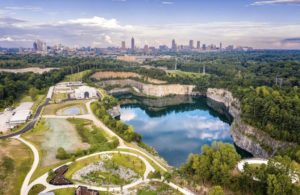 The Westside is a historically rich and diverse area of Atlanta where industrialism meets modernism. Rejuvenation and opportunity come to mind with all that is offered from the wonderful attractions of this community.
Ranging from top-rated restaurants, designer retail and eclectic breweries—to the BeltLine extension, new Westside Park, and a multitude of charming neighborhoods flowing throughout the Westside—there is something for everyone to enjoy.
History
Much of Atlanta’s industrial and Civil War history occurred in the area now known as West Midtown. Several buildings still in use today are located next to the historic Norfolk Southern rail lines General Sherman used when he invaded Atlanta in 1864. In 1881, the International Cotton Exposition was held at the north end of the corridor, for which the Exposition Cotton Mills were built. Mule pulled trolleys brought workers starting in 1882, and these became electrified in 1894.
The Huff House, which stood on Huff Road, was the oldest house standing in the city when it was demolished in 1954. Blandtown, located along Huff Road, was one of the first black settlements around Atlanta after the Civil War. The community went into decline in the 1950s, such that by the 1990s, the once-residential neighborhood was rezoned to strictly industrial usage.
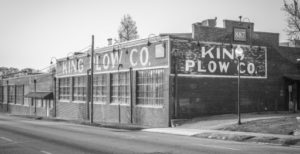
The Marietta Street corridor continued as an industrial and warehouse area, though starting in the 1960s, the commercial strip along Marietta Street suffered with suburbanization. In the 1990s, several adaptive reuse projects were initiated (Hasting’s Seed Company, The Carriage Works, King Plow Arts Center, and the Allied Warehouse), signaling the renaissance of the area.
Attractions
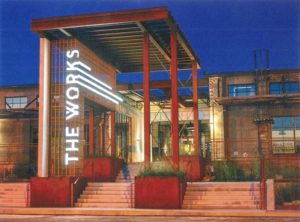
Terminal West – King Plow – Westside Provisions District – Goat Farm – Westside Cultural Arts Center – Georgia Tech – Atlantic Station – Brickworks – BeltLine – TopGolf – Quarry Yards – Westside Park – The Works